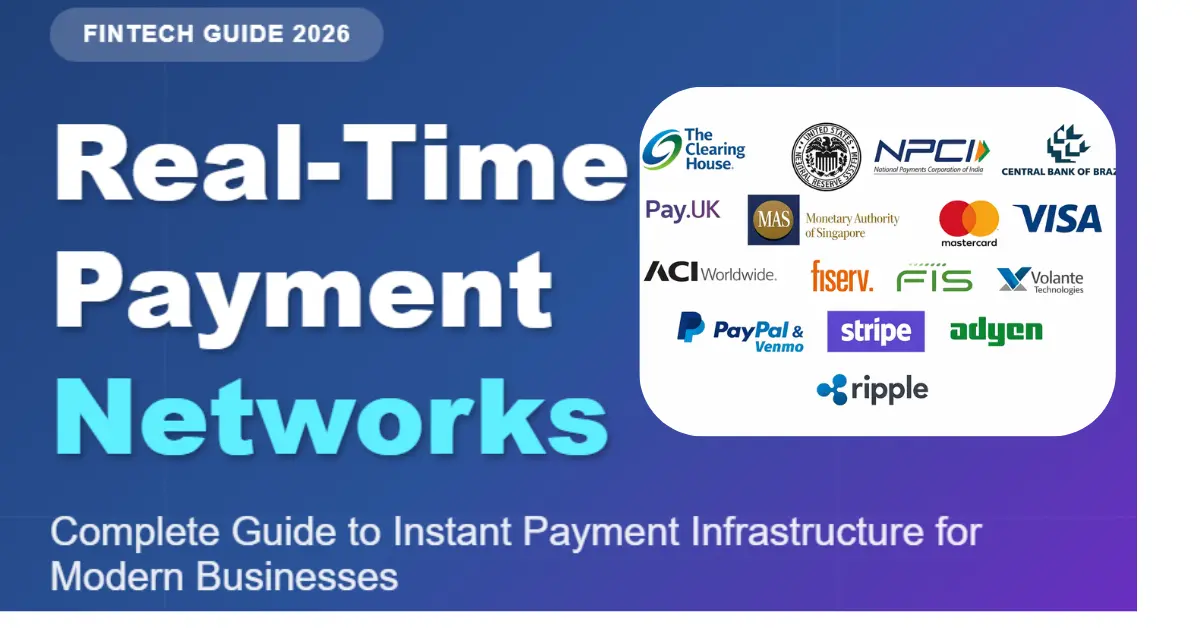
Real-Time Payment Networks: A Complete Guide to Instant Payment Infrastructure for Modern Businesses
The financial landscape has undergone a dramatic transformation in recent years, with real-time payment networks emerging as a critical infrastructure for businesses seeking speed, efficiency, and competitive advantage. As consumer expectations shift toward instantaneous transactions and companies demand greater control over cash flow, understanding real-time payment networks has become essential for financial decision-makers across industries.
Understanding Real-Time Payment Networks
Real-time payment networks represent the backbone infrastructure that enables instant fund transfers between financial institutions, operating continuously without the delays traditionally associated with payment processing. Unlike conventional payment systems that batch transactions for periodic processing, these networks handle each payment individually and immediately, ensuring funds move from one account to another within seconds rather than days.
Download Market Research Report of “Real Time Payments Market Growth Drivers, Trends, and Regional Forecast by 2034″
The fundamental distinction of real-time payment networks lies in their always-on availability. These systems function around the clock, including weekends and holidays, eliminating the frustrating gaps that occur with traditional banking hours. When a business initiates a payment through a real-time payment network, the transaction completes almost instantaneously, with both parties receiving immediate confirmation that funds have successfully transferred.
This infrastructure operates through sophisticated technology platforms maintained by financial authorities, banking consortiums, or central banks. The networks connect participating financial institutions, creating a digital highway for money movement that bypasses the slower routes of legacy payment systems.
Major Real-Time Payment Networks Operating Today
The global expansion of real-time payment networks has created a diverse ecosystem of instant payment solutions, each serving specific geographic regions and markets.
United States Real-Time Payment Networks
The American market features two primary real-time payment networks that businesses can leverage. The RTP network, launched in 2017 by The Clearing House, represents a collaborative effort among major commercial banks including JPMorganChase and other leading financial institutions. This network has steadily expanded its reach and capabilities, enabling businesses to send and receive instant payments across participating banks.
FedNow Service entered the market more recently in 2023, introduced by the Federal Reserve as a comprehensive real-time payment solution. The Federal Reserve’s involvement brings additional credibility and broad accessibility to instant payments, with the potential to reach virtually any financial institution in the United States through the Fed’s existing relationships.
Both networks operate independently but serve complementary roles in advancing real-time payment adoption across American businesses. Companies may find their financial institutions connected to one or both networks, expanding their options for instant payment processing.
International Real-Time Payment Networks
Beyond American borders, real-time payment networks have achieved remarkable adoption rates and processing volumes. India’s Unified Payments Interface (UPI) stands as one of the world’s most successful implementations, processing billions of transactions monthly and fundamentally changing how consumers and businesses exchange money in the world’s most populous nation.
The United Kingdom’s Faster Payment System (FPS) pioneered real-time payments in Europe, establishing standards that influenced subsequent network development across the continent. Brazil’s Pix network has similarly revolutionized payment practices in Latin America, achieving widespread adoption within months of launch through user-friendly features and broad institutional participation.
European markets benefit from various real-time payment networks operating across the eurozone, facilitating instant transactions between businesses and consumers throughout member countries. While most current real-time payment networks serve single countries or specific regions, development efforts continue toward enabling seamless cross-border instant payments, which would dramatically expand the utility of these systems for international commerce.
How Real-Time Payment Networks Process Transactions
The mechanics behind real-time payment networks demonstrate sophisticated technology working seamlessly behind simple user interfaces. When a business initiates an instant payment, the process unfolds through several rapid stages that collectively take only seconds to complete.
The payment journey begins when the sender submits transaction details through their digital banking platform, specifying the recipient’s account information and payment amount. The sending bank immediately verifies these details, confirming that sufficient funds exist and that the transaction meets all security requirements.
Once verified, the payment enters the real-time payment network for processing. Unlike batch systems that collect transactions throughout the day before processing them together, real-time payment networks handle each transaction individually and immediately. This individual processing ensures instant completion without waiting for batch cycles.
The network routes the payment to the recipient’s financial institution, which credits the funds to the designated account. Both the sender and recipient receive immediate notifications confirming the completed transaction, providing certainty that distinguishes real-time payments from traditional methods where confirmation may arrive hours or days later.
Importantly, real-time payment networks process transactions with finality and irrevocability. Once completed, these payments cannot be reversed through the network, creating certainty for recipients and requiring senders to ensure transaction accuracy before initiating payments.
Business Advantages of Real-Time Payment Networks
Organizations adopting real-time payment networks gain multiple operational and strategic benefits that extend beyond simple transaction speed.
Precision Cash Flow Management
Real-time payment networks provide businesses with unprecedented control over payment timing. Rather than sending payments days in advance to ensure on-time arrival, companies can retain funds in their accounts until the exact moment payment is due, then transfer instantly. This precision maximizes interest-earning potential on working capital while maintaining perfect payment reliability.
The instant nature of these networks also improves receivables management. Businesses receiving payments through real-time payment networks access funds immediately upon transaction completion, eliminating the cash flow gap that occurs with traditional payment methods. This immediate availability enables faster inventory replenishment, quicker service delivery, and improved financial flexibility.
Enhanced Business Relationships
Supplier relationships strengthen when businesses demonstrate consistent, reliable payment practices. Real-time payment networks enable companies to pay vendors precisely when promised, building trust and potentially creating opportunities for favorable terms negotiation. Some suppliers may offer discounts for instant payment, recognizing the value of immediate fund access.
Similarly, businesses that receive instant payments can provide superior customer experiences by delivering goods or services immediately upon payment confirmation, without waiting for funds to clear through traditional banking channels.
Operational Efficiency Improvements
Real-time payment networks streamline back-office operations through reduced reconciliation complexity. The immediate confirmation and finality of these transactions simplify accounting processes, as payments don’t remain in pending status for days. Finance teams spend less time tracking payment status and resolving timing discrepancies, redirecting effort toward strategic financial management.
The transparency inherent in real-time payment networks also strengthens financial controls. Businesses can monitor payment activity in real-time, quickly identifying any irregularities and maintaining tighter oversight of cash movement.
Practical Applications Across Industries
Real-time payment networks serve diverse business scenarios across sectors, from manufacturing to services to digital platforms.
Manufacturing and distribution companies use these networks for just-in-time supplier payments, enabling rapid response to production needs without maintaining excessive inventory. When urgent materials are required, instant payment facilitates immediate supplier fulfillment.
Professional services firms leverage real-time payment networks to compensate freelancers, contractors, and temporary workers immediately upon project completion. This capability proves particularly valuable for creative professionals, technical consultants, and specialized service providers who appreciate prompt compensation.
The gig economy thrives on real-time payment networks, with platforms paying drivers, delivery workers, and service providers instantly after completing tasks. This immediate compensation model improves worker satisfaction and platform competitiveness.
Insurance companies increasingly adopt real-time payment networks for claims disbursement, recognizing that policyholders facing emergencies benefit significantly from instant fund access rather than waiting days for claim payments to process.
Government agencies utilize these networks for distributing tax refunds, emergency assistance, and benefit payments, ensuring citizens receive funds quickly when needed most.
Implementing Real-Time Payment Networks in Your Business
Organizations considering real-time payment network adoption should begin by assessing their financial institution relationships and available network access. Many banks now offer real-time payment capabilities, though availability varies by institution and account type.
Businesses should evaluate their payment volumes, timing requirements, and vendor preferences when determining which payments benefit most from real-time processing. Not every transaction requires instant settlement, so strategic implementation focuses on high-value use cases where speed creates meaningful advantages.
Integration with existing financial systems represents an important consideration. Modern treasury management systems and enterprise resource planning platforms increasingly support real-time payment networks, enabling seamless incorporation into established workflows.
Working with experienced payment consultants can help businesses navigate network selection, implementation strategies, and optimization approaches. Financial institutions with sophisticated cash management expertise can provide valuable guidance tailored to specific industry requirements and operational patterns.
The Future of Real-Time Payment Networks
The trajectory of real-time payment networks points toward continued expansion and enhanced capabilities. Cross-border instant payment functionality currently under development will eventually enable businesses to send and receive international payments with the same speed and certainty they experience domestically.
Network interoperability improvements will likely allow seamless instant payments between different real-time payment networks, further expanding the reach and utility of these systems. As adoption increases and networks mature, businesses will find instant payment options available for virtually all commercial transactions.
Organizations that establish real-time payment network capabilities now position themselves advantageously for this evolving landscape, building expertise and operational processes that will serve them well as instant payments become the standard expectation rather than a competitive differentiator.
Conclusion
Real-time payment networks have fundamentally transformed how businesses move money, offering unprecedented speed, control, and certainty in payment processing. From optimizing cash flow to strengthening business relationships to streamlining operations, these networks deliver tangible benefits that extend far beyond simple transaction speed.
As customer and supplier expectations increasingly favor instant payment options, businesses that embrace real-time payment networks gain competitive advantages while future-proofing their payment infrastructure. Whether processing domestic payments through established networks or preparing for emerging cross-border capabilities, real-time payment adoption represents a strategic investment in operational excellence and financial agility that will serve organizations well in an increasingly digital, instantaneous business environment.

Marvin O. Doran is a healthcare and life sciences research specialist with extensive experience in analyzing pharmaceutical pipelines, biotechnology breakthroughs, and medical device innovations. He writes data-driven, SEO-optimized market reports and in-depth company profiles to help industry professionals, investors, and researchers stay informed about the latest trends in global healthcare markets.