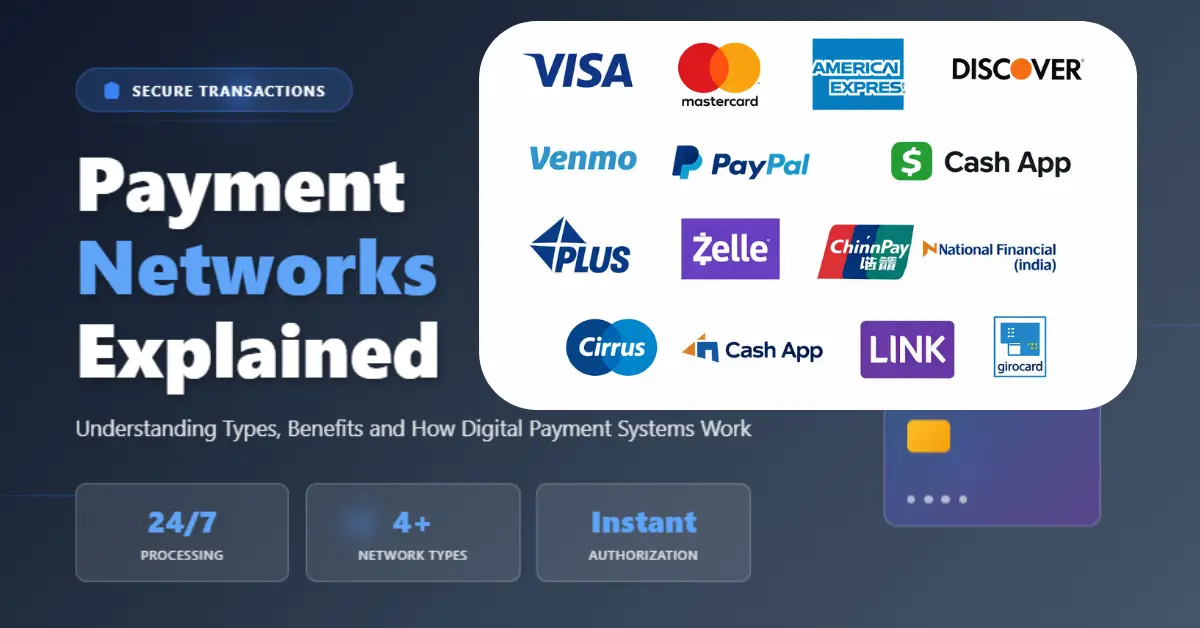
In today’s digital economy, payment networks form the invisible infrastructure that powers every transaction you make, from your morning coffee purchase to international business transfers worth millions. Whether you’re swiping your credit card, tapping your smartphone, or sending money to a friend, payment networks work tirelessly behind the scenes to ensure your funds reach their destination securely and efficiently. Understanding what a payment network is and how it operates has become essential knowledge for businesses and consumers navigating the modern financial landscape.
Defining Payment Networks: The Foundation of Digital Commerce
A payment network represents a sophisticated technological ecosystem that facilitates electronic fund transfers between multiple parties including consumers, merchants, financial institutions, and payment service providers. These networks function as digital highways, routing transaction information and monetary value across vast distances in fractions of a second.
At its core, a payment network serves as the intermediary infrastructure connecting various participants in financial transactions. When you make a purchase, the payment network bridges the gap between your bank account and the merchant’s account, handling authentication, authorization, and settlement processes that make modern commerce possible.
Download Full Report – Payment Gateway Market Analysis to 2034
These systems have evolved far beyond simple transaction processing. Today’s payment networks incorporate advanced security protocols, fraud detection algorithms, real-time data analytics, and compliance mechanisms that protect all parties involved while ensuring regulatory adherence across multiple jurisdictions.
Major Categories of Payment Networks
Understanding the different types of payment networks helps businesses and consumers choose appropriate solutions for their specific needs. Each category serves distinct purposes and operates according to unique principles.
Card-Based Payment Networks
Card payment networks represent perhaps the most recognized category, facilitating billions of transactions daily across the globe. These networks divide into open-loop and closed-loop systems, each offering distinct characteristics.
Open-loop networks like Visa and Mastercard operate on a four-party model involving cardholders, merchants, issuing banks, and acquiring banks. These networks don’t issue cards directly but rather provide the infrastructure allowing third-party financial institutions to issue branded cards. This model creates extensive reach, with Visa commanding approximately 52.60% of the global market and Mastercard holding around 23.70% market share.
Closed-loop networks such as American Express and Discover maintain tighter control by issuing cards directly to consumers while also managing merchant relationships. American Express captures roughly 19.60% of the market, with Discover accounting for about 4.00%. This integrated approach allows closed-loop networks greater flexibility in offering unique rewards programs and customer experiences.
These card networks handle everything from authorization requests to fund settlement, ensuring merchants receive payment while cardholders access credit or debit their accounts seamlessly.
Electronic Funds Transfer Systems
Electronic funds transfer networks enable direct account-to-account money movement without physical cash or checks. These systems power countless essential financial activities, from payroll processing to large-scale institutional transfers.
The Automated Clearing House represents a cornerstone EFT system, processing batch transactions efficiently for applications like direct deposit of wages, recurring bill payments, and business-to-business transfers. ACH networks handle enormous transaction volumes while maintaining relatively low processing costs, making them ideal for routine, predictable payments.
Wire transfer networks provide immediate fund availability for time-sensitive or high-value transactions. Unlike ACH’s batch processing approach, wire transfers move money individually and rapidly, though typically at higher costs reflecting their premium service level.
Large-value payment systems like the Clearing House Interbank Payments System handle institutional transfers between financial organizations, processing trillions of dollars daily in wholesale banking operations. These specialized networks maintain the liquidity and stability of the broader financial system.
Internationally, various regional EFT networks serve specific markets. The Single Euro Payments Area standardizes euro transfers across European countries, while systems like China’s Cross-border Interbank Payment System facilitate international yuan transactions. Each network operates under local regulatory frameworks while increasingly seeking interoperability with global counterparts.
Peer-to-Peer Payment Platforms
Peer-to-peer payment networks have revolutionized personal money transfers by eliminating traditional friction points. Services like Venmo, PayPal, Zelle, and Cash App enable individuals to send money directly to each other using simple identifiers like phone numbers or email addresses rather than bank account details.
These platforms typically link to users’ bank accounts, debit cards, or credit cards, drawing funds from these sources when payments are initiated. The simplicity of P2P networks has driven explosive adoption, particularly among younger demographics who value convenience and speed in financial transactions.
Beyond personal use, P2P networks increasingly serve business purposes. Freelancers receive client payments, small businesses collect customer funds, and service providers accept tips and gratuities through these accessible platforms. Some P2P networks have expanded functionality to include merchant services, investment features, and even cryptocurrency trading.
The social dimension of certain P2P platforms adds unique value, allowing users to share payment context through messages or emojis, creating a more engaging experience than traditional banking transfers offer.
Automated Teller Machine Networks
ATM networks provide essential infrastructure for cash access and basic banking services beyond traditional branch hours. While digital payments continue growing, ATMs remain critical for cash-dependent transactions and underserved populations.
These networks operate on two primary models. Proprietary ATM networks serve specific financial institutions, allowing their customers free or low-cost access to cash withdrawal and account services. Interbank ATM networks like PLUS and Cirrus connect machines across multiple institutions, enabling travelers and customers to access funds virtually anywhere.
Regional variations in ATM network development reflect local banking structures and consumer preferences. India’s National Financial Switch connects thousands of banks and ATMs nationwide, while China UnionPay dominates Asian markets. European networks like LINK in the United Kingdom and Girocard in Germany facilitate widespread cash access across their regions.
Modern ATM networks increasingly offer enhanced services beyond simple withdrawals, including deposit acceptance, bill payments, and account transfers, transforming these machines into comprehensive self-service banking terminals.
The Payment Network Transaction Journey
Understanding how payment networks process transactions reveals the remarkable coordination occurring within seconds of each purchase. The process unfolds through several critical stages, each essential to successful fund transfer.
Transaction Initiation and Authorization
Every payment begins when a customer presents payment credentials at a physical or digital point of sale. The merchant’s payment terminal or online gateway captures this information and immediately transmits an authorization request through the payment network infrastructure.
This request travels to the payment processor, which formats the data according to network specifications before routing it to the appropriate card network. The card network identifies the issuing bank associated with the payment credentials and forwards the authorization request for evaluation.
Verification and Decision Making
The issuing bank receives the authorization request and instantly analyzes multiple factors. First, it confirms sufficient funds or credit availability to cover the transaction amount. Simultaneously, sophisticated fraud detection systems assess the transaction against the cardholder’s typical spending patterns, geographic location, and known risk indicators.
If any red flags emerge, the bank may decline the transaction or request additional authentication from the cardholder. When everything appears legitimate, the issuing bank approves the transaction and transmits an authorization code back through the network chain to the merchant.
Transaction Approval and Customer Confirmation
Upon receiving approval, the merchant’s system completes the sale and provides confirmation to the customer through a receipt, on-screen message, or email notification. At this point, the funds are earmarked in the customer’s account but haven’t physically moved yet.
This authorization creates a temporary hold, reserving the transaction amount so it remains available for settlement while preventing the customer from spending the same money twice.
Settlement and Fund Movement
Settlement represents the actual transfer of monetary value between financial institutions. Rather than settling each transaction individually, payment networks typically batch approved transactions for processing at predetermined intervals, often at day’s end.
The merchant submits their accumulated approved transactions to their payment processor, which aggregates this data and routes it through the card network to the respective issuing banks. Each issuing bank then transfers the appropriate funds to the merchant’s acquiring bank, minus applicable network fees and processing charges.
Finally, the acquiring bank credits the merchant’s business account with the net settlement amount. Depending on the merchant’s agreement terms and the specific payment network involved, this final deposit typically occurs within one to three business days after the original transaction.
Key Advantages of Modern Payment Networks
Payment networks deliver substantial benefits that have transformed commerce and financial services across the globe.
Speed and Operational Efficiency
Contemporary payment networks process transactions with remarkable speed, often completing authorization in under two seconds. This velocity enables smooth customer experiences while allowing businesses to confirm payment before releasing goods or services. The efficiency extends beyond individual transactions to overall business operations, reducing manual reconciliation work and minimizing payment-related delays.
Comprehensive Security Infrastructure
Payment networks invest billions in security technologies protecting sensitive financial data. Advanced encryption scrambles payment information during transmission, rendering it useless to potential interceptors. Tokenization replaces actual card numbers with unique identifiers, ensuring that even if transaction data is compromised, it cannot be reused fraudulently. Machine learning algorithms continuously analyze transaction patterns, flagging suspicious activities for review before financial damage occurs.
Universal Acceptance and Market Access
Major payment networks operate globally, providing merchants access to customers worldwide while giving consumers payment flexibility regardless of location. A business accepting Visa or Mastercard can immediately serve international customers without establishing banking relationships in each country. Similarly, travelers can confidently use their cards knowing acceptance is virtually universal.
Economic Efficiency Through Scale
By processing enormous transaction volumes, payment networks achieve economies of scale that reduce per-transaction costs. These efficiencies ultimately benefit merchants through lower processing fees and consumers through broader payment options. The infrastructure investments required for secure, reliable payment processing become economically viable only at massive scale, making large networks particularly valuable.
Continuous Innovation
Payment networks constantly develop new capabilities responding to evolving consumer preferences and technological possibilities. Contactless payment technology, biometric authentication, and mobile wallet integration all emerged from network innovation efforts. These advancements enhance user experiences while maintaining security and reliability standards.
Challenges Facing Payment Networks
Despite their sophisticated capabilities, payment networks confront ongoing challenges requiring constant attention and resources.
Security Threats and Fraud Prevention
Cybercriminals continuously develop new attack methods targeting payment systems and customer data. Payment networks must maintain vigilance against data breaches that could expose millions of payment credentials, unauthorized transaction attempts using stolen information, and increasingly sophisticated fraud schemes.
The arms race between security measures and criminal tactics demands perpetual investment in defensive technologies and threat intelligence capabilities. Networks that fail to protect customer data face not only financial losses but also devastating reputational damage.
Fee Structures and Merchant Relations
Transaction fees represent the primary revenue source for payment networks, creating inherent tension between network profitability and merchant costs. Small businesses particularly feel pressure from processing fees that can significantly impact narrow profit margins.
Payment networks must balance fair compensation for the infrastructure and security they provide against merchant concerns about cost burdens. Finding this equilibrium becomes more complex as regulatory bodies in various jurisdictions impose fee caps or transparency requirements.
Regulatory Compliance Complexity
Payment networks operate across multiple jurisdictions, each with unique regulatory requirements addressing anti-money laundering, counter-terrorism financing, consumer protection, and data privacy. Maintaining compliance across this complex landscape requires substantial legal expertise and operational flexibility.
Regulatory environments continuously evolve, with new requirements emerging regularly. Networks must adapt their systems and policies while ensuring uninterrupted service, creating operational challenges and compliance costs.
The Evolving Payment Network Landscape
Payment networks are experiencing rapid transformation driven by technological innovation and shifting consumer expectations.
Contactless Payment Adoption
Near Field Communication technology has enabled contactless payments that simply require tapping a card or device near a payment terminal. This method offers speed advantages while reducing physical contact, a consideration that gained importance during recent public health concerns. Growth rates for contactless payments have exceeded 40% annually in many markets, indicating strong consumer preference for this convenience.
Mobile Wallet Integration
Smartphones have become payment devices through digital wallet applications storing payment credentials securely. These wallets leverage device security features like biometric authentication while offering additional conveniences such as loyalty program integration and digital receipt storage. Mobile payment volumes are projected to reach several trillion dollars annually within coming years as adoption accelerates globally.
Open Banking Revolution
Open banking frameworks allow third-party developers to access customer financial data with permission, fostering innovation in payment services and financial management tools. This approach breaks down traditional institutional barriers, creating opportunities for new payment solutions that better serve specific customer needs.
Central Bank Digital Currencies
Several nations are developing or piloting central bank digital currencies that could fundamentally reshape payment infrastructure. These government-issued digital currencies promise enhanced efficiency, financial inclusion for underserved populations, and greater monetary policy control. While widespread implementation remains years away, CBDCs represent potentially transformative innovation in payment networks.
Conclusion
Payment networks constitute essential infrastructure supporting modern economic activity, connecting billions of people and businesses through secure, efficient fund transfer systems. From credit card networks processing everyday purchases to specialized systems handling international banking transactions, these networks enable commerce at unprecedented scale and speed. Understanding what payment networks are, how they function, and their various types empowers businesses to make informed decisions about payment acceptance while helping consumers appreciate the complex systems protecting their financial transactions. As technology advances and consumer preferences evolve, payment networks will continue adapting, promising even greater convenience, security, and innovation in the years ahead.

Marvin O. Doran is a healthcare and life sciences research specialist with extensive experience in analyzing pharmaceutical pipelines, biotechnology breakthroughs, and medical device innovations. He writes data-driven, SEO-optimized market reports and in-depth company profiles to help industry professionals, investors, and researchers stay informed about the latest trends in global healthcare markets.