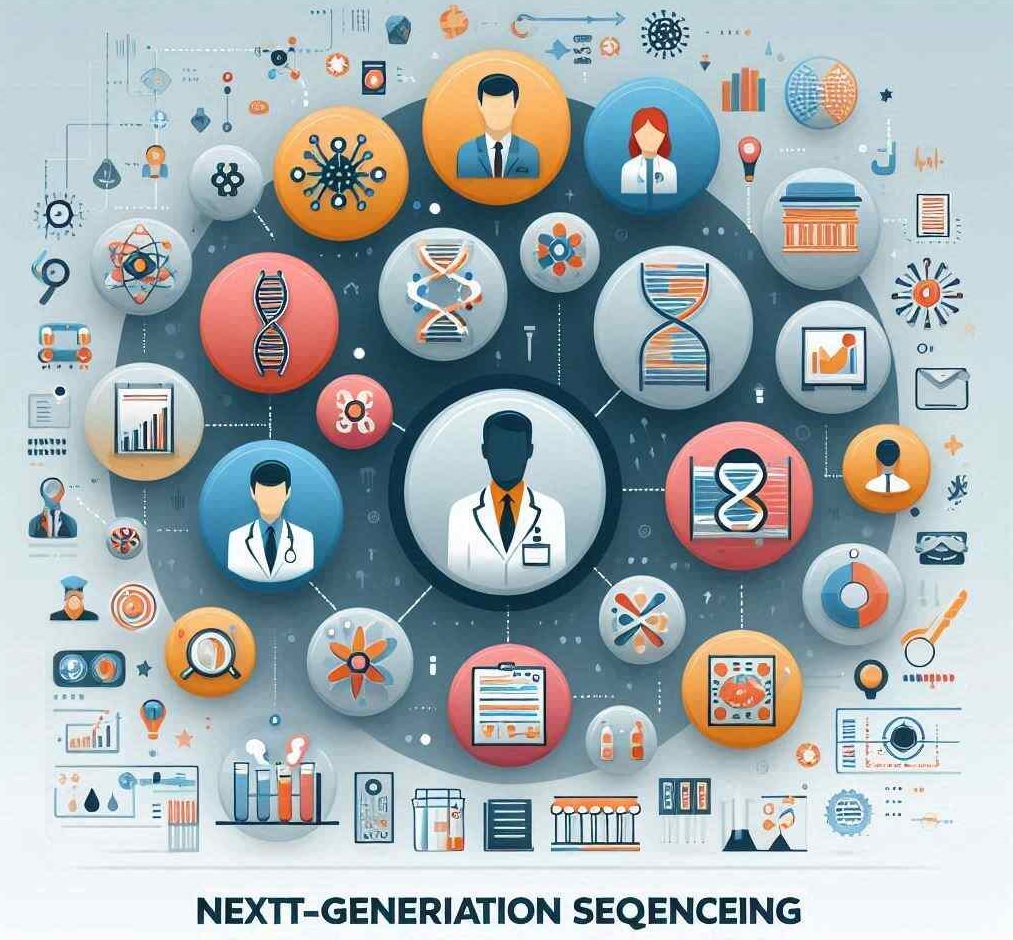
The field of genomics has undergone rapid transformation over the past two decades, primarily driven by advancements in Next Generation Sequencing (NGS) technologies. NGS allows scientists to decode entire genomes faster, more accurately, and at lower costs than traditional sequencing methods. As a result, NGS companies are expanding globally, offering a diverse range of job opportunities across research, technology, bioinformatics, data science, and clinical applications.
This article examines the primary job designations within NGS organizations and offers detailed insights into their responsibilities, required skills, and career trajectories.
Understanding the Next Generation Sequencing (NGS Ecosystem
NGS companies encompass multiple disciplines. Their operations integrate experimental science, computational biology, data management, and product development. Broadly, these teams can be categorized into three domains:
- Wet lab roles – Focus on experimental and laboratory processes for DNA/RNA sequencing, sample preparation, and quality control.
- Dry lab roles – Involve computational analysis, data interpretation, and algorithm development.
- Cross-functional and administrative roles – Support project coordination, compliance, and interdepartmental collaboration.
Each job designation in this ecosystem plays a critical role in ensuring that sequencing workflows produce reliable, biologically meaningful results.
Scientist Next Generation Sequencing (NGS)
Overview
Scientists specializing in Next Generation Sequencing (NGS) are at the core of genomic research. They design, optimize, and conduct experiments involving complex sequencing protocols. Their duties often involve developing and validating novel techniques or improving existing sequencing pipelines.
Responsibilities
- Design experiments tailored to sequencing goals such as variant discovery, transcriptomics, or metagenomics.
- Optimize workflows for library preparation, amplification, and sequencing.
- Collaborate with bioinformaticians for data interpretation.
- Maintain detailed documentation and ensure regulatory compliance.
Skills and Qualifications
- PhD or Master’s in Molecular Biology, Genetics, or related field.
- Strong hands-on experience with sequencing instruments (Illumina, Oxford Nanopore, PacBio).
- Deep understanding of molecular workflows and data interpretation.
Postdoc/Research Scientist – Next Generation Sequencing (NGS)
Overview
Postdoctoral researchers or research scientists contribute to cutting-edge NGS research, often bridging the gap between discovery science and applied research. They typically work under principal investigators or lead specific projects within a research or industry setting.
Responsibilities
- Develop hypotheses-driven research related to genomic analysis.
- Publish high-impact papers and present at conferences.
- Test emerging sequencing technologies or algorithms for performance benchmarking.
- Mentor junior scientists or technicians.
Skills and Qualifications
- PhD in Genomics, Computational Biology, or a related field.
- Deep knowledge of advanced sequencing tools and bioinformatics.
- Publication record and demonstrated research independence.
Next Generation Sequencing Specialist
Overview
NGS Specialists ensure seamless operation of sequencing workflows. They act as technical experts, troubleshooting sequencing runs, maintaining instruments, and training users. This position combines technical know-how with operational management.
Responsibilities
- Prepare samples, perform runs, and analyze sequencing performance.
- Implement quality control measures.
- Maintain and calibrate sequencing machines.
- Provide technical support to research teams.
Skills and Qualifications
- Bachelor’s or Master’s in Biotechnology or Molecular Biology.
- Strong practical experience with sequencing platforms (Illumina, Thermo Fisher, etc.).
- Excellent troubleshooting and communication abilities.
Bioinformatics Analyst
Overview
Bioinformatics Analysts analyze raw sequencing data, transforming it into biologically meaningful insights. They use computational tools and statistical models to detect genetic variants, perform alignments, and generate visual reports.
Responsibilities
- Process raw reads, align sequences, and identify variants.
- Apply statistical methods and pipelines for genomic data analysis.
- Integrate multi-omics datasets for functional interpretation.
- Generate comprehensive reports for researchers or clinicians.
Skills and Qualifications
- Proficiency in programming languages such as Python, R, or Perl.
- Experience with NGS data formats like FASTQ, BAM, and VCF.
- Familiarity with version control systems and reproducible research workflows.
- Strong analytical and problem-solving skills.
Bioinformatics Engineer in Next Generation Sequencing (NGS)
Overview
Bioinformatics Engineers focus on building and maintaining computational infrastructures and pipelines necessary for large-scale sequencing data analysis. Unlike analysts, their primary role is software engineering and pipeline automation.
Responsibilities
- Develop computational pipelines for genomic data processing.
- Optimize algorithms for performance across computing clusters and cloud platforms.
- Collaborate with scientists to automate data analysis workflows.
- Maintain databases and ensure system scalability.
Skills and Qualifications
- Bachelor’s or higher in Computer Science, Computational Biology, or related field.
- Strong expertise in Linux environments, scripting, and cloud computing (AWS, GCP).
- Deep understanding of NGS file formats and data structures.
Bioinformatician
Overview
A Bioinformatician combines biology and computation to design analytical tools and models for interpreting sequencing data. They may also play a role in developing custom software solutions for specific research needs.
Responsibilities
- Design and deploy analytical workflows for genomic and transcriptomic analysis.
- Curate and integrate large datasets from public repositories.
- Train teams on bioinformatics tools and databases.
- Collaborate on grant proposals or inter-lab research projects.
Skills and Qualifications
- Solid foundation in statistics, molecular biology, and computer science.
- Strong programming and algorithmic design abilities.
- Familiarity with machine learning techniques applied to genomics.
- Ability to document pipelines in reproducible and sharable formats.
Genome Analyst
Overview
Genome Analysts focus on variant interpretation and genome annotation. Their job is to translate raw data into clear biological explanations that can drive discoveries or clinical insights.
Responsibilities
- Annotate and interpret genomic variants using established databases.
- Identify clinically significant mutations or patterns.
- Validate findings using cross-sample comparison and literature.
- Collaborate with clinicians or researchers to deliver actionable genomic reports.
Skills and Qualifications
- Graduate degree in Genomics, Bioinformatics, or Medical Genetics.
- Understanding of genomic variation databases (ClinVar, dbSNP, gnomAD).
- Experience with human genome reference builds and annotation pipelines.
- Strong analytical reasoning and attention to detail.
Clinical Genomics Variant Scientist – Next Generation Sequencing (NGS
Overview
This role integrates genomics with medicine. Variant Scientists interpret genomic data for clinical applications such as hereditary disease diagnosis, cancer genomics, and pharmacogenomics.
Responsibilities
- Evaluate and classify genetic variants according to ACMG or AMP guidelines.
- Generate clinical reports describing variant implications.
- Collaborate with clinicians for genomic consultation and patient care decisions.
- Ensure compliance with quality standards (CAP/CLIA).
Skills and Qualifications
- PhD or MS in Clinical Genomics, Molecular Genetics, or Bioinformatics.
- In-depth knowledge of variant curation and annotation tools.
- Familiarity with regulatory frameworks and data privacy laws.
- Excellent communication and interpretation skills for clinical contexts.
NGS Laboratory Technician
Overview
Laboratory Technicians form the operational foundation of every sequencing project. Their main responsibilities focus on precise sample handling, library preparation, reagent management, and workflow organization.
Responsibilities
- Prepare DNA/RNA samples and perform library construction.
- Conduct PCR amplification, quantification, and quality control.
- Load sequencing machines and monitor run progress.
- Maintain laboratory records and equipment logs.
Skills and Qualifications
- Bachelor’s degree in Life Sciences.
- Hands-on experience with molecular biology techniques.
- Ability to follow standard operating procedures (SOPs).
- Exposure to laboratory information management systems (LIMS).
Molecular Biologist
Overview
Molecular Biologists investigate biological processes at the molecular level, often applying NGS methods to study gene expression, mutations, or epigenetic modifications. They bridge classical biology with cutting-edge sequencing technologies.
Responsibilities
- Design and execute molecular experiments for genomic analysis.
- Study gene regulatory networks using RNA-seq or ChIP-seq.
- Validate sequencing outcomes through qPCR or Sanger sequencing.
- Document and publish methodological advancements.
Skills and Qualifications
- Strong background in molecular and cell biology.
- Fluency in experimental design and data analysis methods.
- Proficiency with laboratory instrumentation and molecular cloning.
- Curiosity-driven approach toward experimental discovery.
Data Scientist (Genomics)
Overview
Data Scientists in NGS companies focus on extracting insights from massive multi-dimensional datasets. They employ statistical modeling, machine learning, and visualization to make genomic data actionable.
Responsibilities
- Apply deep learning or AI models to predict genomic features.
- Visualize complex data relationships to support decision-making.
- Develop predictive algorithms for variant pathogenicity or drug response.
- Integrate genomics data with clinical and proteomic data sources.
Skills and Qualifications
- Strong command of statistics, machine learning, and data visualization.
- Proficiency in Python, R, and relevant data science frameworks.
- Experience handling large datasets using cloud-based architectures.
- Understanding of genomics and molecular biology principles.
Project Coordinator
Overview
The Project Coordinator ensures that the scientific and technical workflows within NGS projects proceed smoothly. This role aligns research, timelines, budgets, and collaboration across multiple teams.
Responsibilities
- Manage day-to-day project operations and deadlines.
- Communicate progress with internal stakeholders and clients.
- Maintain documentation, budgets, and compliance checklists.
- Support coordination between wet lab, dry lab, and clinical teams.
Skills and Qualifications
- Bachelor’s or Master’s in Biotechnology, Project Management, or related field.
- Strong organizational and communication abilities.
- Familiarity with scientific terminology and sequencing workflows.
- Ability to handle multitasking and resource planning effectively.
The Future of Next Generation Sequencing (NGS) Careers
With the explosion of precision medicine, agricultural genomics, and microbial sequencing, demand for professionals trained in NGS is increasing exponentially. The integration of artificial intelligence, automation, and single-cell sequencing continues to drive innovation. Future NGS roles will likely require not just specialization in biology or computation but also interdisciplinary literacy combining both domains.
Skills like programming, statistics, and genomic interpretation are becoming essential for nearly all positions. Additionally, soft skills such as teamwork, international collaboration, and data ethics awareness are gaining importance in multinational biotech firms and clinical laboratories.
Individuals entering this field can anticipate involvement in transformative research, such as gene therapy development, rare disease diagnostics, and evolutionary genomics—making it one of the most promising and intellectually rewarding disciplines in modern science.
FAQs about Job Designations in Next Generation Sequencing (NGS) Companies
1. What educational qualification is needed to start a career in Next Generation Sequencing (NGS)?
Entry-level positions like laboratory technician or junior bioinformatics analyst often require a bachelor’s degree in biology, genetics, biotechnology, or computer science. For scientist or specialist roles, a master’s or PhD is preferred.
2. What is the difference between a Bioinformatics Analyst and a Bioinformatics Engineer?
A Bioinformatics Analyst focuses on interpreting data using standard tools and methods, whereas a Bioinformatics Engineer designs and develops the underlying computational infrastructure or pipelines that analysts use.
3. How do NGS roles differ between academic and industry settings?
Academic roles emphasize research and discovery, often leading to publications. Industry roles focus more on product development, clinical validation, and scalability, emphasizing reproducibility and quality control.
4. Is programming mandatory for working in Next Generation Sequencing (NGS)?
Programming is essential for bioinformatics and data-focused roles, but less critical for wet-lab roles. However, familiarity with data interpretation tools (Python, R) greatly enhances career prospects.
5. Do NGS companies hire fresh graduates?
Yes. Many genomics companies provide training programs for graduates with a strong biology or data background, particularly for technician or junior analyst roles.
6. What certifications help in advancing Next Generation Sequencing (NGS) careers?
Certifications in bioinformatics analysis (Coursera, edX), cloud computing, or laboratory quality assurance (CLIA, ISO) can significantly boost employability.
7. Which NGS platforms are most popular in industry?
Illumina remains the most widely adopted platform, followed by Oxford Nanopore, Thermo Fisher, and PacBio, each offering unique advantages depending on research goals.
8. Are remote roles available in Next Generation Sequencing (NGS) companies?
Many computational roles such as data analysis, bioinformatics, and data science support remote work, given their reliance on cloud servers and virtual collaboration tools.
9. What is the growth outlook for Next Generation Sequencing (NGS) related jobs?
The global NGS market is projected to grow at over 15% annually, supported by rapid advancements in genomics-based healthcare, personalized medicine, and molecular diagnostics.
10. Which skills can make a candidate stand out in Next Generation Sequencing (NGS) recruitment?
Multidisciplinary expertise—combining biological understanding, computational aptitude, and project communication—sets candidates apart in a competitive job landscape.

Marvin O. Doran is a healthcare and life sciences research specialist with extensive experience in analyzing pharmaceutical pipelines, biotechnology breakthroughs, and medical device innovations. He writes data-driven, SEO-optimized market reports and in-depth company profiles to help industry professionals, investors, and researchers stay informed about the latest trends in global healthcare markets.